In 1968 the Parish Council told residents that the village could not afford to buy the Horse and Jockey field, and between then and 1971 there are no further references to the need for a village playing field in the Parish Council Minutes Book. But that is not to say that the lack of a playing field was not of concern to some villagers.
In early 1971 the Parish Council again considered the provision of a playing field but recognised that there was little land either suitable or available for this project. It felt that part of the allotment site off Back Lane could be used even though there was an open rubbish pit in the south east corner of the field. This pit would have to be filled and the land levelled, but the Parish Council considered that it could be used as part of a children’s play area. Only a small portion of this area was being used for allotments (as part of a chicken run) and the tenant would be asked to relocate to another part of the site when the tenancies were renewed in November. Part of the remainder of the allotment field was also unused and could be made into a village playing field.
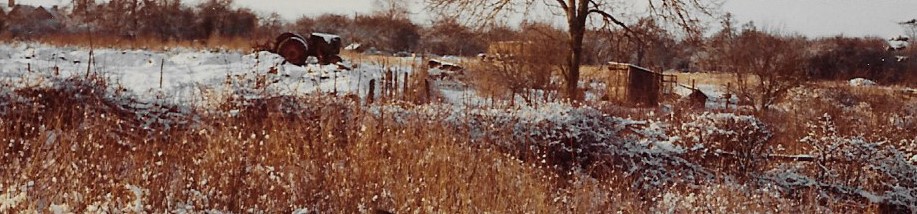
Lord Brassey was asked for his views on the possibility of providing a playground and playing field on this site, and he again reiterated his opposition to any building on the allotment field. (Whilst the Parish Council was the freeholder of the site, a covenant included when the land was conveyed from the Apethorpe Estate to the Parish Council in 1919 stipulated that the site could not be developed without the agreement of Lord Brassey). However, Lord Brassey considered that the rubbish pit was very untidy and an eyesore. in addition to being a health hazard and a breeding ground for rats. His view was that, should the pit be filled and levelled, that corner of the field could be made into a play area for children. (By coincidence and good fortune, the provision of the village sewers and STW was about to start and the contractors were asked, and agreed, to put any surplus material in the pit. Infill was also available from residential sites being developed in the village at the time).
A public meeting was called in June 1971, to allow residents to express their opinions on the proposed scheme, at which 38 residents voted in favour of the project, no-one voted against and there were 4 abstentions. Despite no-one voting against the scheme concerns were expressed, notably that the allotment field was registered as common land so could not be used for this purpose, and that the cost of the project would be a charge on the rates. On this last point, residents were reassured that there was about £800 in the Village Trust Fund which the Charity Commission had given permission to be used for a village playing field. Nevertheless, villagers were opposed to any increase to the Parish Precept to pay for the scheme.
The Parish Council sought advice from the Northamptonshire Playing Field Association (NPFA) on technical aspects of the scheme and the possibility of grant-aid being made available for the project. It also asked about any issues that may arise if the field was registered under the Commons Registration Act. The Council was advised that, if the field was registered as common land, it must not be closed to members of the public and car parking should not be permitted on the site. It was later discovered that the site of the proposed playground was not registered as common land.
Subsequently, the pit was filled with surplus stone and soil, but rubbish continued to be left on the site and the Rural District Council put up a noticeboard prohibiting the tipping of rubbish. (This mysteriously disappeared on one occasion – removed by persons unknown!) In June, the tenant of the allotment on part of the proposed site for a children’s play area was issued a verbal Notice to Quit the plot in November (the Parish Council having allocated a site for his chicken run on a vacant allotment north of the site). A written and formal Notice was issued in August. That tenant was a Mr Gynn, who had been Chairman of the Parish Council at the time of the failed acquisition of the Horse and Jockey field in the 1960s.
In November, Mr Gynn refused to vacate his allotment, which held up the levelling of the site and delayed further progress on the scheme. Nevertheless, technical work was continuing and the Annual Parish Meeting in 1972 heard that planning permission had been granted for the children’s playground, comprising an area of some 70yds by 70yds, about a quarter of which was part of the existing poultry run.
A Woodnewton Playing Field Association was constituted to administer the site on behalf of the Parish Council. The Committee comprised residents of the village including Coco the Clown, who eventually became its president. Its main function was to raise funds for site works and the provision of play equipment by organising events such as film nights, bingo evenings, raffles and other social activities. The Committee it would appear was very democratic and circulated annual reports and financial statements to every household in the village.
However, the scheme was still being held up by Mr Gynn’s continuing refusal to vacate the poultry run and move to a site offered by the Council.
Mr Gynn argued that the land was common land and, as he had held his allotment for more than twenty years, the land was owned by him not the Council. Notwithstanding this, the Council re-issued the Notice to Quit telling Mr Gynn to vacate the site as the land now had planning permission for a children’s’ playground.
There was nothing further that could be done regarding technical work or applications for grant-aid until the Parish Council had secured possession of all the land required for the playground. Help was sought from the National Association of Parish Councils which advised that Mr Gynn could not claim ownership of the land because he had paid rent to the Council and in so doing had acknowledged the Council’s title. In addition, he had been given more than the minimum one-year Notice to Quit required by the 1922 Allotments Act. Also, because the Council had not accepted rent from him since February 1971 it had not acknowledged him as a tenant since that date. The National Association of Parish Councils concluded that Mr Gynn was unlawfully in procession of the land.
This advice was circulated widely within the village. Mr Gynn was given a copy and asked to vacate and relocate by the end of the year. Mr Gynn was defiant to the end, and volunteers from the Woodnewton Playing Field Committee and the village bought posts and chicken wire and moved the poultry run to the new site.
In March 1973, the Secretary of the Woodnewton Playing Field Committee was able to tell the Northants PFA that the site was now totally in the possession of the village, and that it was being levelled but had not as yet been seeded. Local fundraising was underway, and a £100 loan (later converted to a grant) had been made by the Village Trust Fund Committee. Quotes had been received for fencing and gates.
Adjacent to the site of the children’s play area were another twelve or so allotments previously rented by Mr Gynn. These had not been let since 1971, were very stony, poor land, and the Parish Council considered that they were unlikely to be cultivated again. The Parish Council decided to ask Lord Brassey if he would be agreeable for this area to be incorporated into the scheme to provide an area for the older children to play games and for other village activities, sports and fetes.
Agreement was reached on the use of the vacant allotment land as a playing field and this area, together with the children’s playground was subsequently fenced and grass seed sown. The Northampton County Council Education Committee made a grant of £310 towards the estimated cost of £935 of the scheme. The County Council also donated a number of trees to be planted on site as part of the “Plant a tree in 73” campaign. By November 1973 the Committee had collected substantially more than the estimated cost of the scheme by fundraising and from donations. Coco himself presented a cheque for £300 he had received from the Esso Petroleum Company to be donated to his favourite cause, and over £700 was received from the Village Trust Fund. Seats had also been donated by Coco and his family, by the landlord and landlady of the White Swan, and by the Woodnewton Playing Field Committee. It was soon realised however that the initial estimate of £935 for the scheme was an underestimate and that further fundraising would be required.
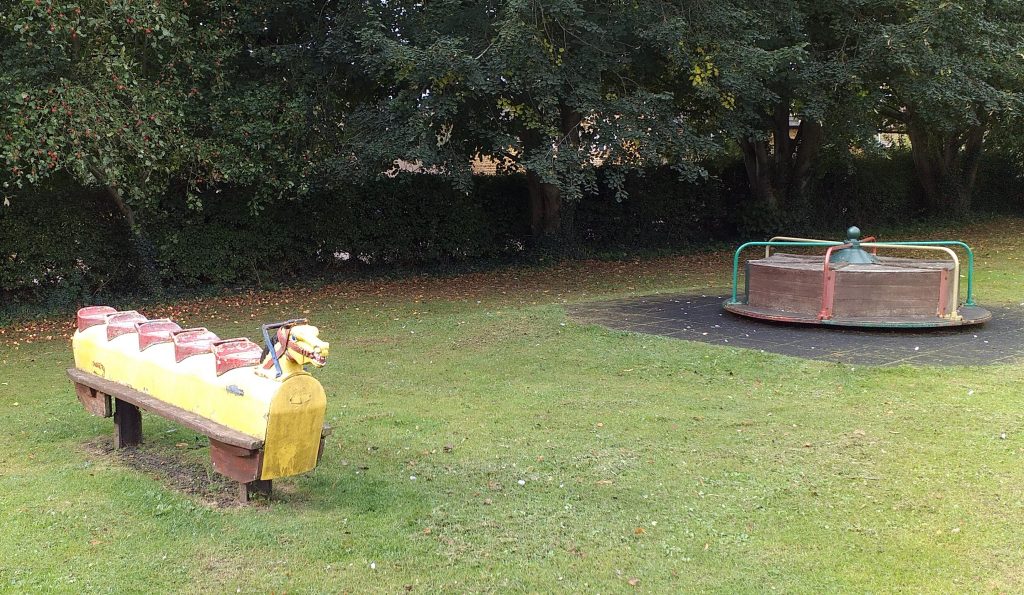
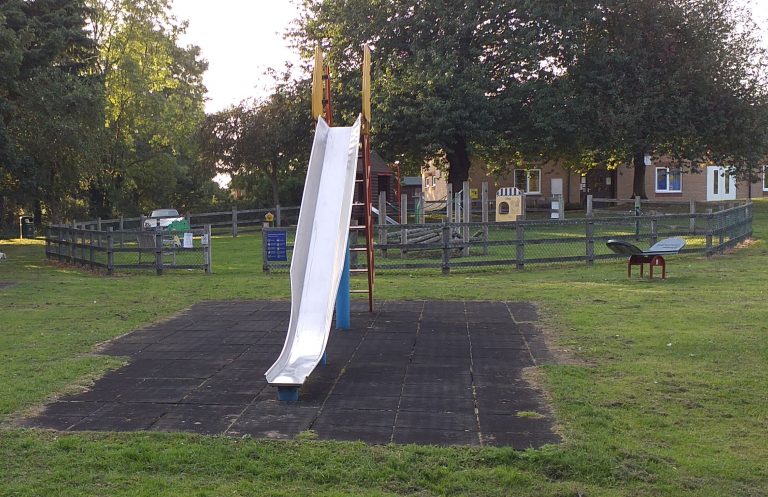
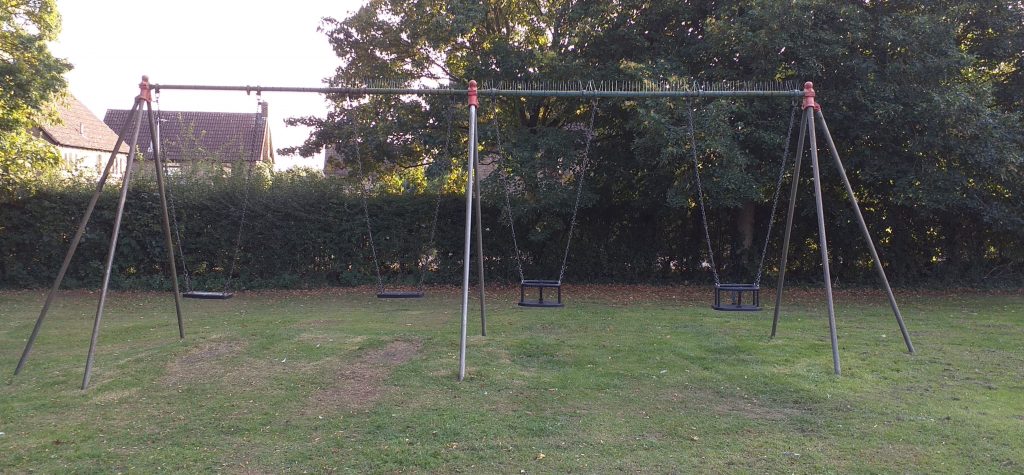
Initially, swings, a roundabout, rocking horse and a slide were bought, and these were erected on site by the Playing Field Committee and other volunteers in late 1973 and early 1974. Problems arising from the uneven settling of the infill materials were overcome and arrangements were put in place for regular safety checks of all the equipment to be undertaken. A local farmer agreed to cut the playing field grass. By the time of the 1974 Annual Parish Meeting the Chairman of the Parish Council was able to reported that the children’s play area and the playing field were ready to be used, and it was hoped to add more equipment as soon as funds were available.
The Playing Field Committee hoped to arrange an official opening, to be conducted by Coco the Clown, and all those involved in the effort to provide the play area would be invited. The emphasis would be on the children of Woodnewton using the facilities rather than on a formal ceremony. Refreshments would be provided, and the opening was set for Whitsuntide 1974. However, Coco’s work commitments intervened. In addition, several jobs remained outstanding and certain repairs and improvements had still to be carried out, so the official opening was postponed. Unfortunately, Coco died in September 1974.
Subsequently it was felt that, as the facilities were already being used by the children of the village, there was no need for an official opening of the play area.
The Committee bought a motor mower in late 1974, part-funded by a grant from the County Leisure and Amenities Committee to cut the grass in the play area and around the trees. Goal posts were erected on the playing field in 1976. The field was also being used by villagers, and one particular event recorded by the Parish Council was permission to Mr Danks to hold “go-cart” racing on the field to raise funds for the Village Care and Community Association. The playing field also became the permanent site for the annual village bonfire and fireworks display.
The development of the playground and playing field continued over the following 10 years or so under the direction of the Playing Field Committee, which continued to fundraise for its maintenance and improvement. However, a note in the Woodnewton News of May 1985 states that “(The) Parish Council will now be directly responsible for the running of the playing field. This will include arranging for regular inspections of the equipment for safety purposes. The Council will not be able to use official funds for maintaining equipment and will be dependent upon voluntary contributions for this as and when the need arises”. It is interesting to note the continuing emphasis that the provision and maintenance of the playing field and playground equipment should not result in an increase in the Parish Precept. The Parish Council also took over responsibility for grounds maintenance which became part of its wider grass-cutting contract in the village.
Towards the end of the 1990s the village decided that the playground and playing field needed to be upgrade and the Playing Field Committee was re-established. In November 1998 the Committee was renamed the Woodnewton Playground Association (1998), with the objective of upgrading the playground equipment and associated facilities on the playing field through fundraising and through applications for grant aid. The new Association quickly applied to the National Lottery for grant aid funding for a £7000 upgrade project, in addition to organising several local fundraising events.
In September 2000, the Woodnewton Playground Association (1998) transferred the ownership and maintenance responsibilities of all the new equipment purchased and installed by the Association to the Parish Council. The new items comprised children’s play equipment (house, double cradle swing, two spring rockers and all associated safety surfaces, two picnic tables and surrounding fence), an Adventure Trail, and a woodcarving of Coco the Clown. Unfortunately, the carving had been installed incorrectly and the wood became rotten which, by the time it was discovered, had progressed too far for the carving to be saved.
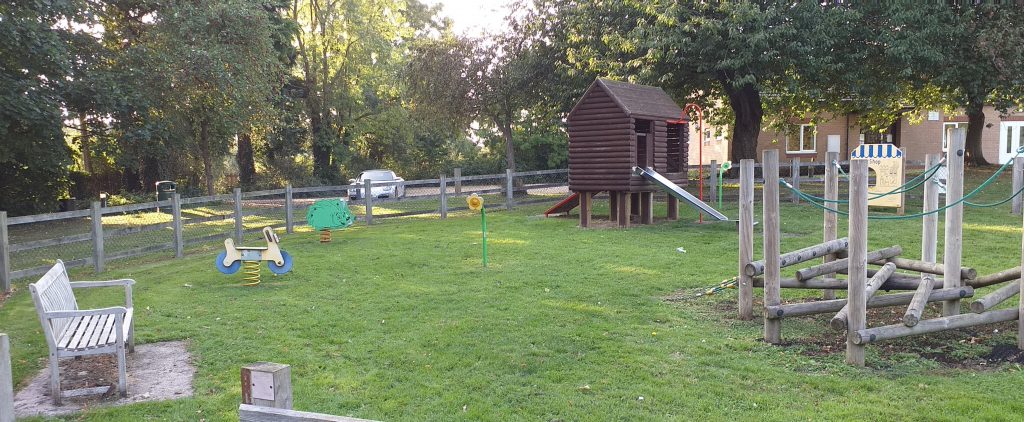
In 2003 the Woodnewton Playground Association (1998) was replaced by the Play and Recreation Committee which continued the work of upgrading and improving the facilities through funds raised locally and by application to grant aiding authorities. The Play and Recreation Committee major contribution to the Playing Field was raising funds for the aerial runway (zip wire) and extension to the activity trail which became available in 2009. These facilities were passed to the Parish Council which assumed ownership and maintenance responsibilities.
At the beginning of 1974, the Parish Council took out insurance for the play area equipment and for any liability that arose from providing such facilities, and that cover continues to the present day. The Parish Council also continues to carry out monthly checks of all the equipment and contracts RoSPA to undertake an annual safety inspection. Urgent repairs are carried out immediately while other maintenance is usually undertaken on Village Clean-Up days.
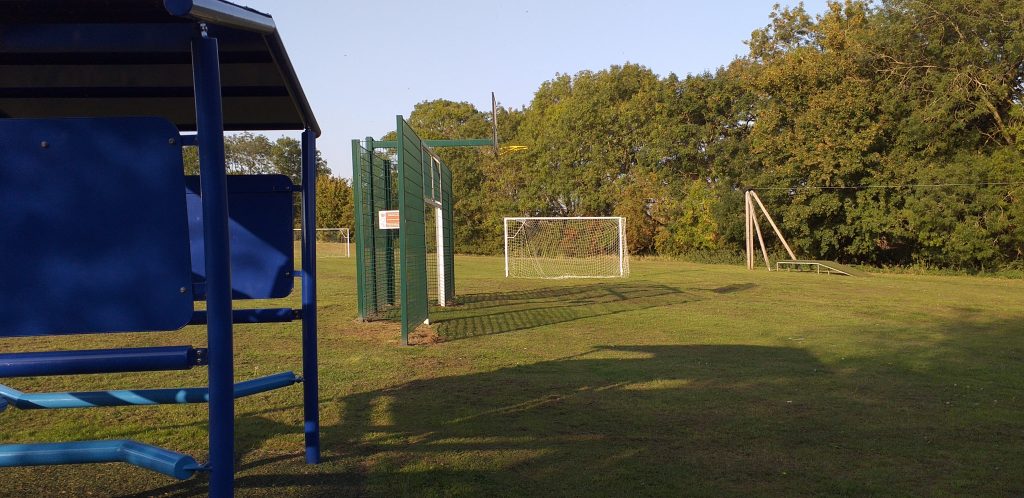
Over the years since the site was first developed the Playing Field Committee (and its successors) and more recently the Parish Council have maintained, upgraded and added to the facilities provided. All replacement and new equipment have been funded by grant-aid from various organisations whenever possible, and from local fundraising events. In 2018, for example, the Parish Council provided equipment for older children funded by the National Lottery and Grantscape (Augean Community Fund). The equipment for older children includes a mini Multi-Use Games Area (MUGA), a teenage shelter, horizontal bars, basket-ball ring and goal mouth.
Grant fund has recently been granted for the refurbishment of the rocking horse and the roundabout, which will be undertaken by Councillors and volunteers from the village.
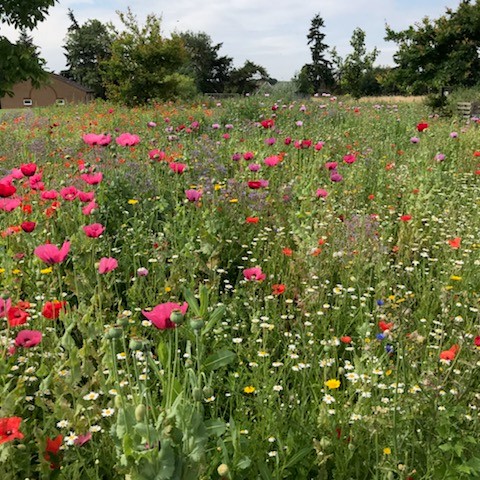
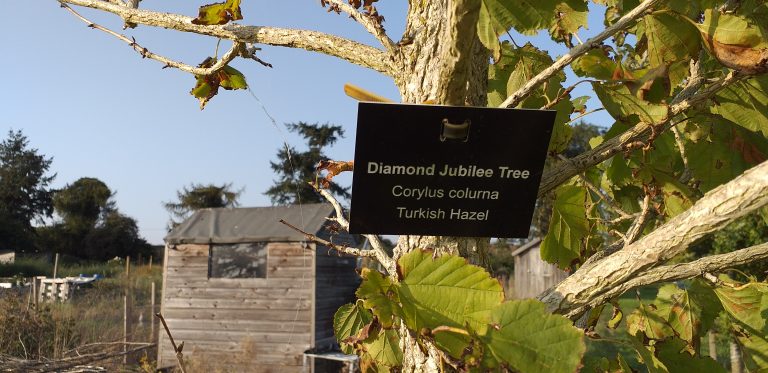
However, the allotment field provides more than just the playing field, play area and allotments. In the 1990s it became the site for the Village Hall for meetings, and social and community activities. A Millennium Capsule was buried (somewhere) on site in 2000 containing, among others, historical records provided by an earlier incarnation of the Local History Group. Fruit and nut trees have been planted just outside of the site on the verge of Orchard Lane. In 2012 six trees were planted on the playing field to commemorate the Diamond Jubilee of the Queen’s accession, but five of these have subsequently been repositioned on site (one was vandalised); their new location now defines a wildflower meadow created by the Parish Council and volunteers in 2018.
The village bonfire and fireworks display has been held on site for over 50 years, but it has been cancelled for the last two years and its future is now in doubt. In 2019 the bonfire could not be ignited because of the very wet weather at the time, although the firework display took place. In 2020 the bonfire and firework display has had to be cancelled because of Covid 19 restrictions. Villagers are currently being consulted (September 2020) to find out if they want the bonfire and firework display to continue in future years.
2020