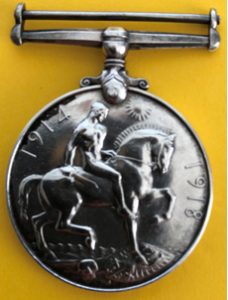
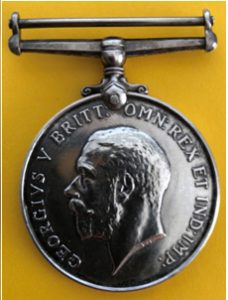
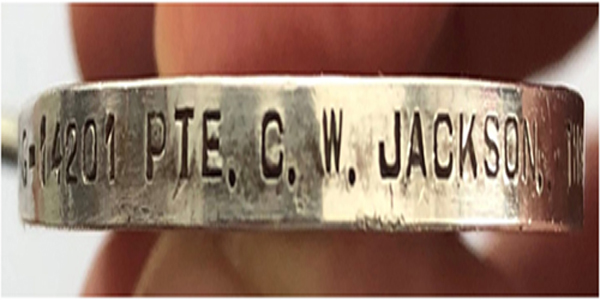
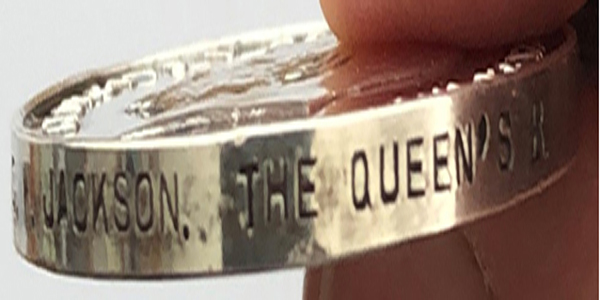
Private Charles William JACKSON
Queens (Royal West Surrey) Regiment G/14201
The week following the 18th November 1916, news was received that one of Woodnewton’s young lads, Charles William Jackson, had been killed in action; the first casualty of men that had enlisted from this village.
Charles Jackson, ‘William’ as he was known, was born on the 17 July 1896 to Frederick and Mary who had been married the previous year. Married in later years, they must have been delighted when their one and only child was born. William started school on 3rd June 1901 and stayed at Woodnewton School until he left for work in August 1910 at the age of 14 yrs.
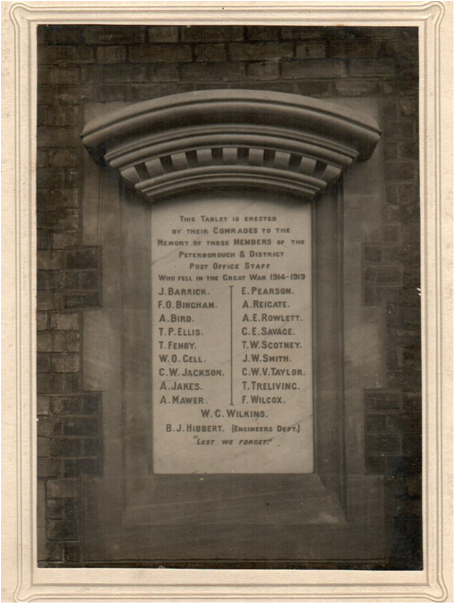
At the beginning of April, 1911, when the census was taken, no occupation was attributed to William, but just the comment ‘At Home’, which we must assume meant that he was working for his father in the Bakery. Life in Woodnewton must have been quite mundane for a teenager working at home, with transport to outside of the village limited to a couple of days a week. At the end of December 1913, the village experienced a little excitement when the vicarage caught fire and was virtually destroyed. New information to hand shows that William must have joined Peterborough Post Office for a short while, but it is not known where he worked.
The following year, incredible news of a happening in Woodnewton made newspapers around England; farmer, Mr Spademan had laid 12 eggs underneath a hen and 13 chickens were hatched. However, later that year news from London was becoming quite disturbing. On 4th August war was declared.
The next day, Lord Kitchener, decided to raise, a series of ‘New Armies’ A recruitment campaign began, ‘Your Country Needs you’ posters and newspaper articles were seen everywhere.
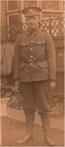 William, was one of 40 men from Woodnewton who responded to this national emergency. They had decided to fight for King and Country. William enlisted at Apethorpe and became Private G/14201, of the Queen’s Royal West Surrey Regiment , the prefix of G to his service number denoted that William was a member of one the New Armies, known as Kitcheners Army
William joined other soldiers at Colchester Garrison sometime after the 11th September and they started their training in civilian clothes and with very little equipment as it was in short supply. They remained there until the following May, when the 18th Division moved to Salisbury Plain, in preparation for the next step of their journey.
During July orders for embarkation to France were issued and on the 27th, William was one of 773 Privates, other ranking soldiers, and together with 23 horses and 42 mules embarked at Folkestone in SS Victoria and crossed to Boulogne. The following day the Battalion marched to Bertangles.
Over the next year, the Battalion fought their way from village to village in Northern France. On 1st July 1916, the British Army opened its new offensive in the area to the north of the River Somme. The soldiers were unaware of the horror that lay ahead.
Over the next weeks of intense battles, appalling injuries, and horrific number of soldiers killed, possession of the areas of Bazantin Ridge, Trones and Delville Woods, Thiepval Ridge and Schwarben Redoubt were taken.
At the beginning of November, the diaries of the 7th Batallion show that they were again involved in heavy fighting in the Regina and Hessian trenches. Soldiers were drowning in the muddy trenches, due to intense wet weather.
On the 17th November verbal instructions for the attack on Desire Trench, Ancre, were received at the British Headquarters. Overnight the soldiers were moved from Ovillers Huts to the trenches. The morning of the 18th was extremely cold. Snow fell, which later turned to rain, and made the conditions very slippery. Visibility being nil. Several hours of fighting ensued and heavy casualties were suffered.
Three days later, a telegram arrived at the home of Frederick and Mary Jackson “ Deeply regret to inform you that Private Charles Jackson of 7th Battalion of Queens Royal West Surrey Regiment was killed in action on 18th November – Lord Kitchener expresses his sympathy”.
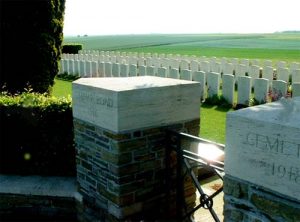
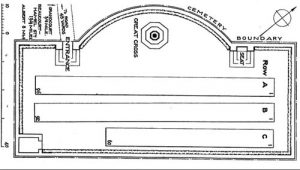
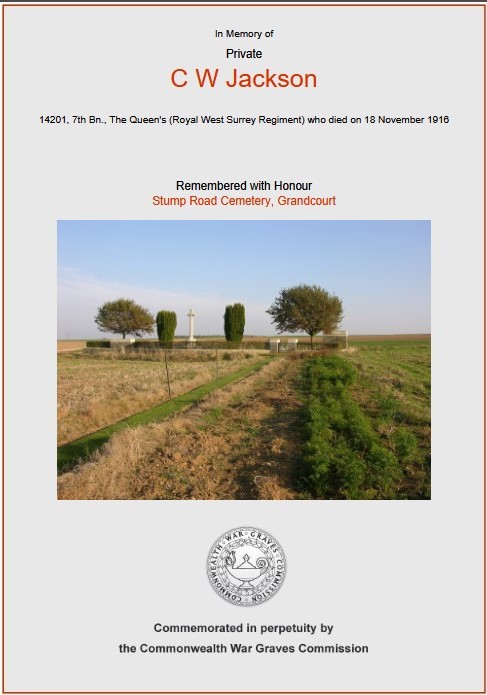
William was buried at the Stump Road Cemetery in France.
Mary Jackson, William’s mother, died a couple of years later, presumably of a broken heart.
2016
2020 – The History Group would like to thank Dr Robert Johnson for his permission to use the new photographs that have been added to this page.