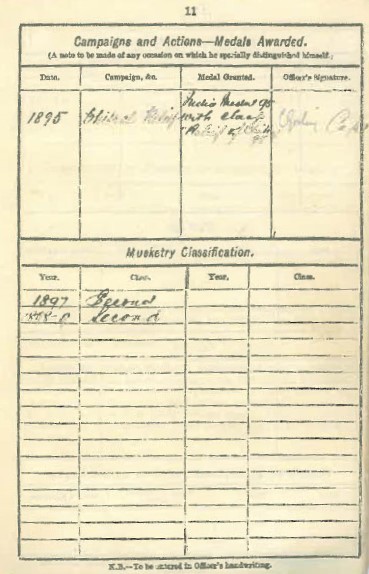
Edward GILBERT
Kings Royal Rifle Corps 6987
Click on Image sto enlarge them.

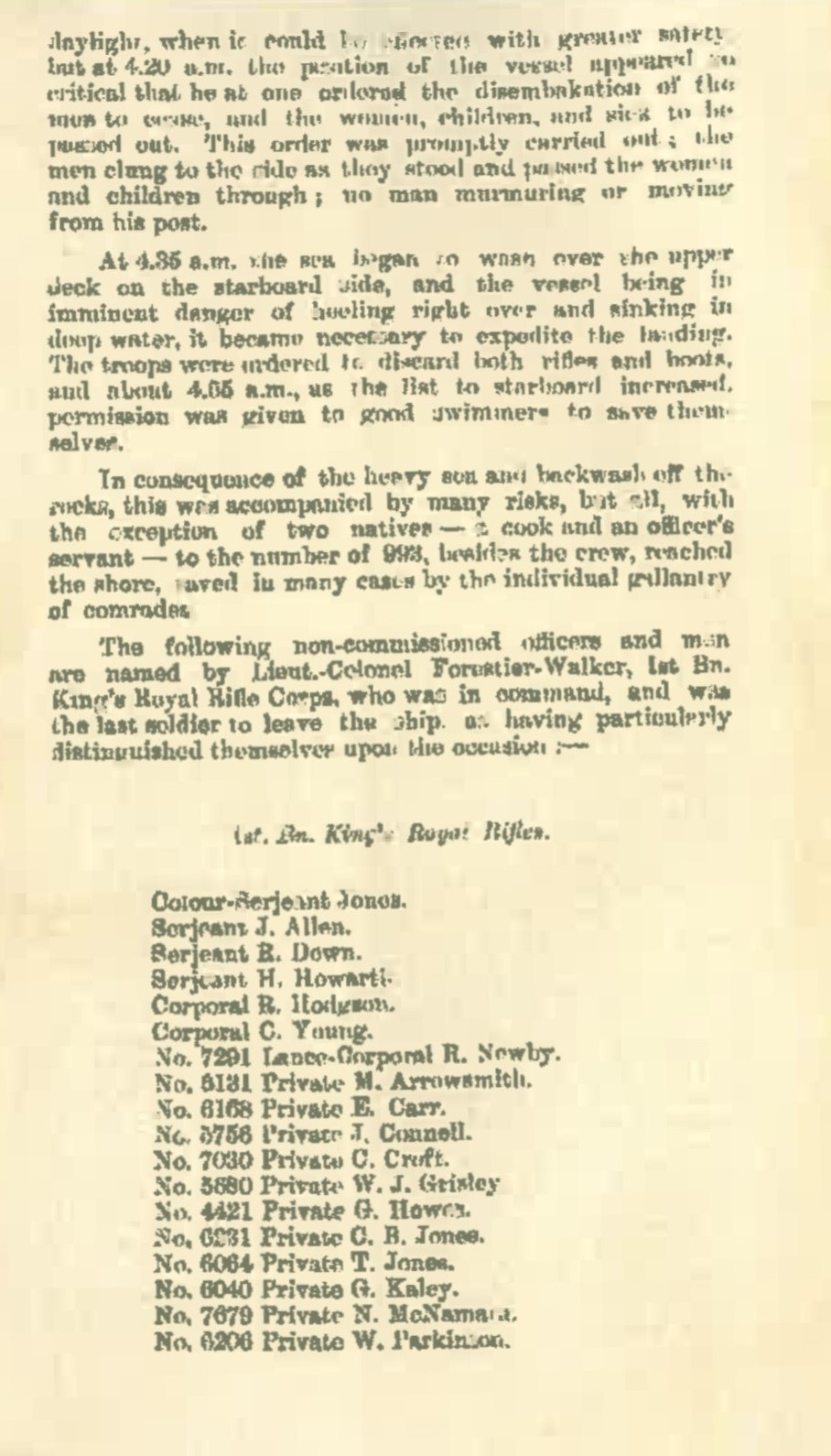
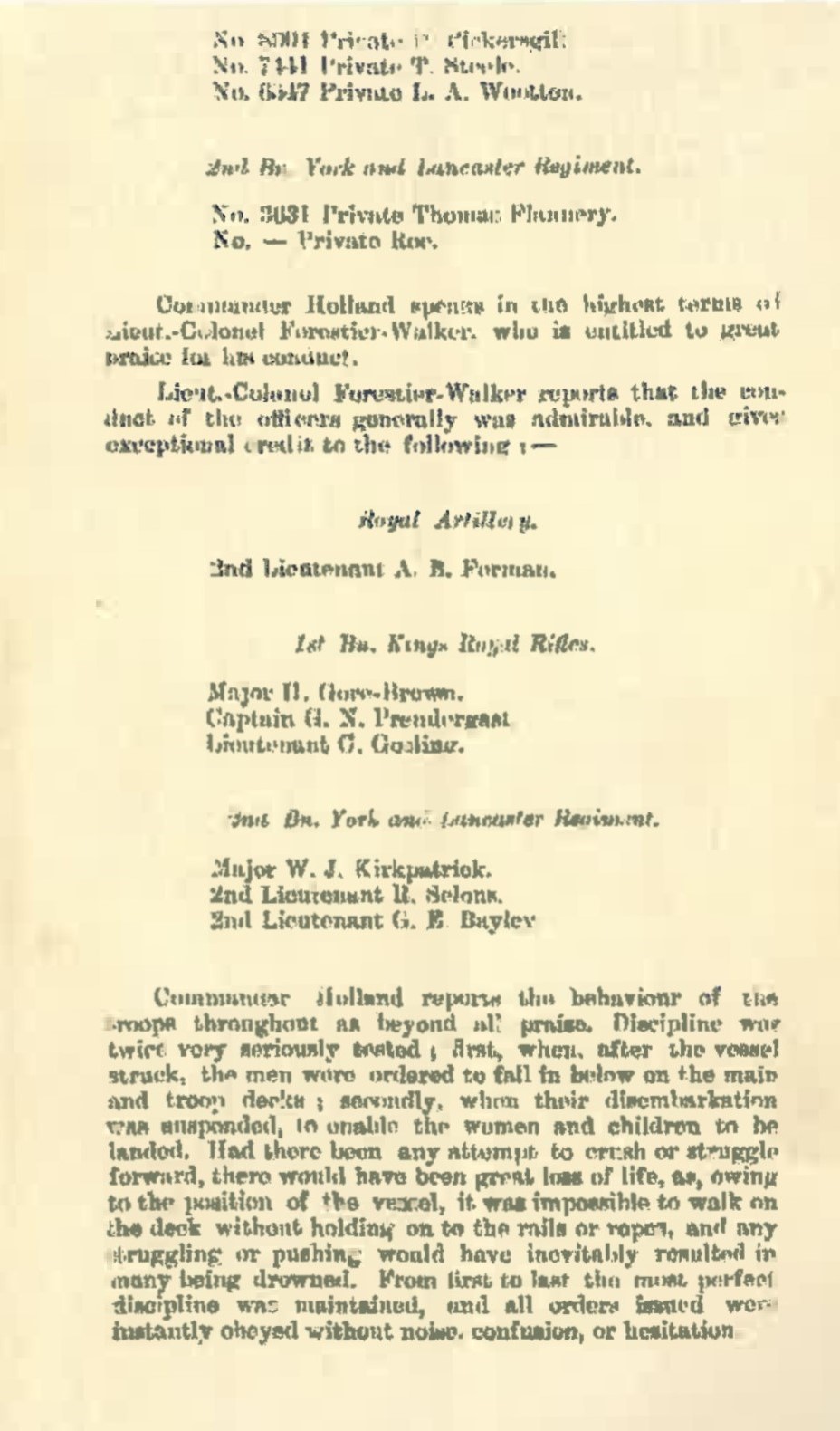
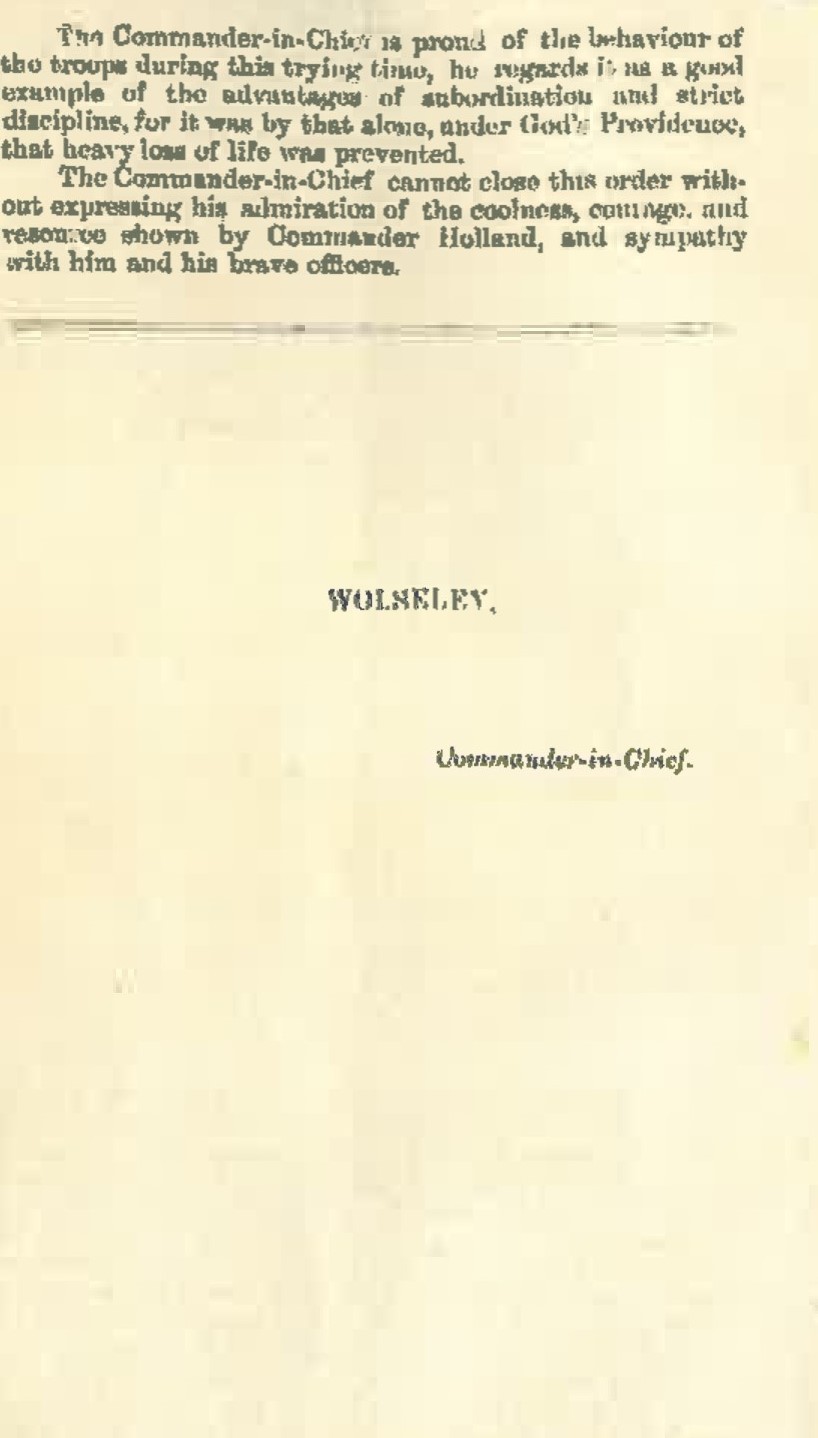
The Warren Hastings
In 1897 the troopship Warren Hastings carrying the 1st Battalion from Cape Town to Mauritius was wrecked on the island of Reunion. Discipline reminiscent of the Birkenhead was rewarded by the safe landing of the whole battalion over the rocks.
Transcript from the Pocket Book
ARMY ORDER
SPECIAL
The following Order is promulgated to the Army with the approval of the Secretary of State for War.
The Commander-in-Chief feels great gratificafion in making Imown to the army, the substance of a report received from the general Officer Commanding at the Mauritius, recording the remarkable courage and discipline displayed by the troops, under most trying circumstances, on board the Royal Indian Marine troopship, “Warren Hastings,” when that ship, steaming at full speed, struck rocks during a pitch-dark night and was wrecked near the village of St. Philippe, in the Island of Reunion, at 2.20am, on the 14å January last.
The troops on board consisted of the headquarters and four companies 1st Bn Kings Royal Rifle Corps, four companies 2nd Bn York and Lancaster Regiment, and a detachment of the Middlesex regiment. They at one fell in, on the main deck, in perfect order, and waited in this position until 4.00am, when the Commander G.E Holland, D.S.O, Royal Indian Marine, having ascertained that there was suffcient room on the rocks, ordered their disembarkaüon to commence by rope ladders from the bows.
Up to this time the vessel, though bumping heavily, remained on a fairly even keel, but soon after she gave a heavy lurch to starboard. Everyone was ordered to the upper deck. The men were marched up, the continuing regularly.
Commander Holland considered the landing of the women, children and sick might be deferred until daylight, when it could be affected with greater safety, but at 4.20am, the position of the vessel appeared so critical that he at once ordered the disembarkation of the men to cease, and the women, children, and sick to be passed out; the men clung to the side as they stood and passed the women and children through; no man murmuring or moving from his post.
At 4.35am. The sea began to wash over the upper deck on the starboard side, and the vessel being in imminent danger of heeling right over and sinking in deep water, it became necessary to expedite the landing. The Troops were ordered to discard their boots, and about 4.55am, as the list to starboard increased, permission was given to good swimmers to save themselves.
In consequence of the heavy sea and backwash off the rocks, this was accompanied by many risks, but all, with the exception of two natives—a cook and an officer’s servant — to number 993, besides the crew, reached the shore, saved in many cases by the individual gallantry of comrades.
The following non-commissioned offcers and men are named by Lieut.Colonel Forrester-Walker, 1st Bn King Royal Rifles who was in command, and was the soldier last to leave the ship, as having particularly distinguished themselves the occasion: –
List of names…..
Commander Holland speaks in the highest terms of Lieut-Colonel Forester Walker, who is entitled to great praise for his conduct.
Lieut.-Colonel Forester-Walker reports that the conduct of the officers generally was admirable, and gives exceptional credit to the following: –
List of names……
Commander Holland reports the behaviour of the troops throughout as beyond all praise. Discipline was twice very seriously tested: first when after the vessel smack, the men were ordered to fall in below on the main and froop decks: secondly, when their disembarkation was suspended, to enable the women and children to be landed. Had there been any attempt to crush or struggle forward, there would have been great loss of life, as owing to the position of the vessel, it was impossible to walk on the deck without holding on to the rails or ropes, and any struggling or pushing would have inevitably resulted in many being drowned. From first to last the most perfect discipline was maintained, and all orders issued were instantly obeyed without noise, confusion, or hesitation.
The Commander in chief is proud of the behaviour of the Troops during this trying time; he regards it, as a good example of subordination and strict discipline, for it was that alone, under God’s Providence, that heavy loss of life was prevented.
The Commander in Chief cannot close this order without expressing his admiration of the coolness, courage, and resource shown by Commander Holland, and sympathy with him and his brave offcers.