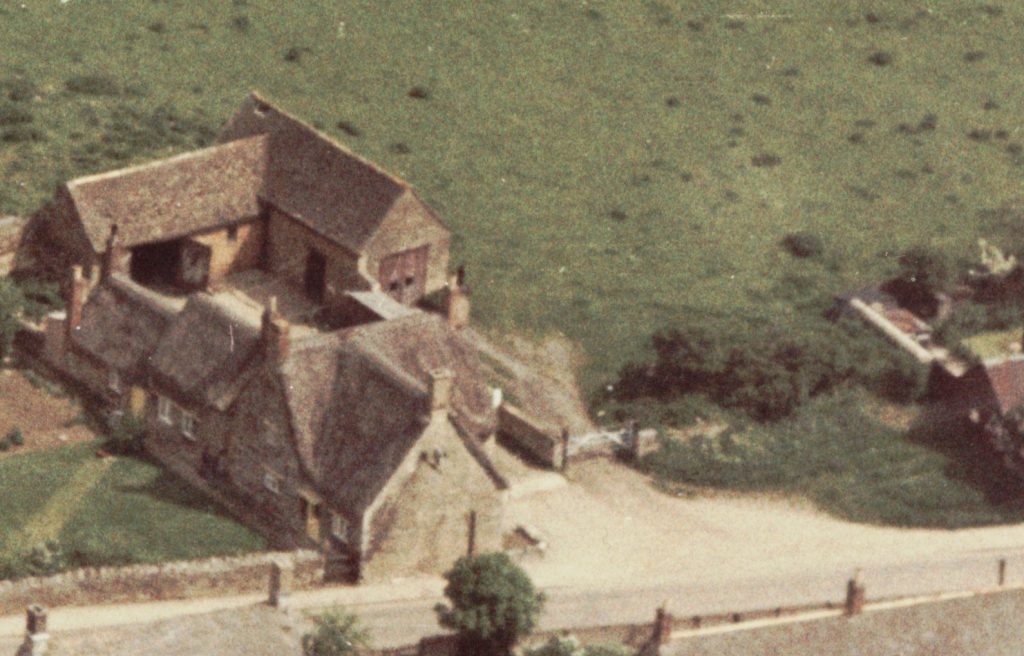
https://woodnewtonhistory.co.uk/playing-field/playing-field-part1/Until the 1960s residents of Woodnewton used the 6 acre field adjacent to the Horse and Jockey Public House as a village playing field, although there was no formal agreement for this with either the Apethorpe Estate or with subsequent owners of the land. The use of thefield was with the permission of the various owners, and the land had always been liable to be sold. As early as 1892 the Earl of Westmorland tried to sell the Horse and Jockey PH together with the field, but it did not sell. The ownership of the pub and field passed to Lord Brassey when he bought the Apethorpe Estate in 1904 and he proceeded to sell off buildings and land in the village – in the sales particulars of what is now 8 Main Street, the
property is described as adjoining the “Cricket Field”. Eventually, the Horse and Jockey PH and Field were sold to the Phipps Brewery Company of Northampton, but the land continued to be used as a playing field with the agreement of the Brewery and the tenants of the public house.
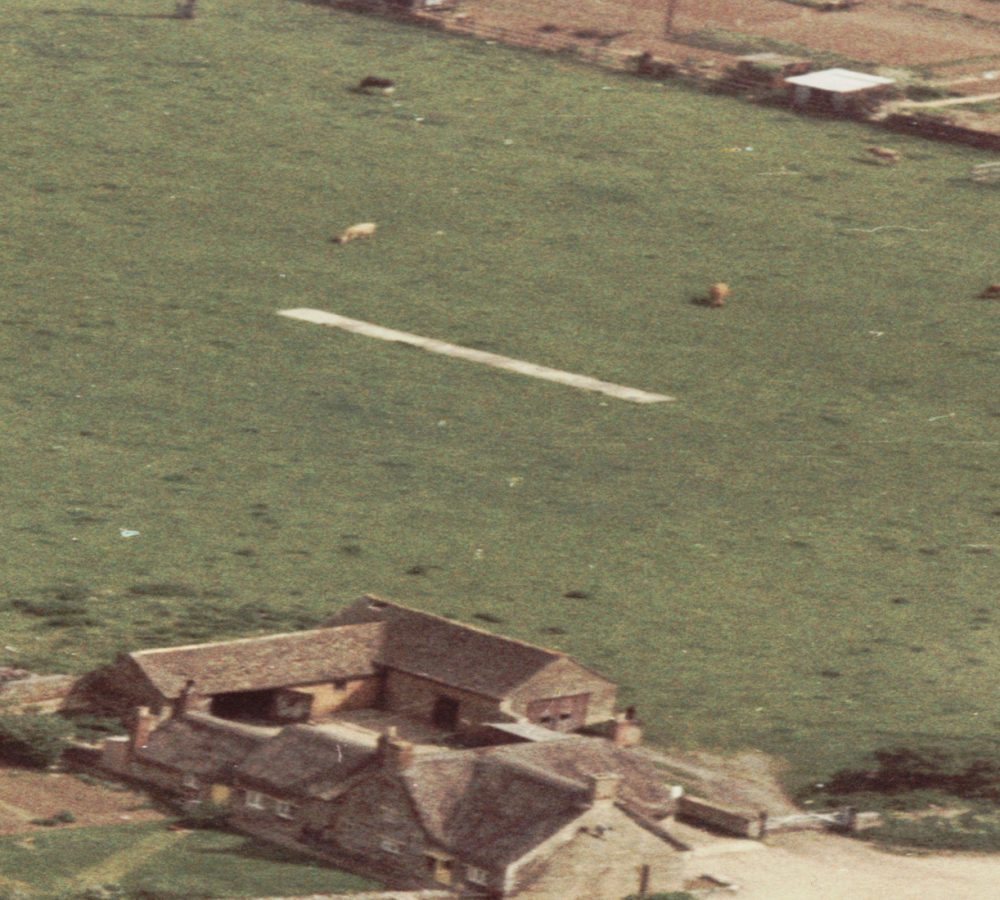
However, the need for housing in Woodnewton was increasing and in 1948 the Parish Council agreed to a proposal by the Rural District Council to build 10 council houses on two acres of the field. When completed this development was named Sycamore Close. The development reduced the area available for sporting activities from 6 acres to 4 acres, and, as the photograph shows, it made the concrete cricket wicket unusable because it was now too close to the garden boundaries of the houses in Sycamore Close. This did not stop cricket being played on the grass however, and the village had a successful cricket team during the 1950s. The “gentleman’s agreement” that the land could be used as a playing field continued into the 1960s until the possibility of the Brewery selling the Horse and Jockey PH and Field arose, and the villagers realised that this could mean the end of that agreement and of the playing field.
Villagers knew that the land was not a “public” playing field and that a covenant to say that the land was the village playing field had not been included in the deeds of the Horse and Jockey when it and the field were sold to the Brewery. So, in the mid-1960s the Parish Council began seriously to look at the future of the Horse and Jockey land as the village playing field, specifically investigating ways for the field to be taken into public ownership.
At that time there was about £600 in a Village Trust Fund which had been collected during the war to provide a welcome home and memorial for residents who had been in the forces. The Village Trust Fund Committee (which comprised several members of the Parish Council as well as other residents) had applied to the Charity Commission for permission to use this money to purchase the playing field and with that agreement had approached Phipps.
Those negotiations had not secured the site so in November 1965 the Parish Council contacted the Northamptonshire Playing Field Association (NPFA) asking for assistance. The NPFA felt that the field, although small was ideal for a playing field for Woodnewton. It described the land as level and well drained, with good access for cars. It was noted that there was no other playground equipment in the village other that at the school.
The NPFA advised that the village needed security of tenure to be able to apply for any funding required to buy the site and suggested asking the Brewery if it would either sell the field to the village or, alternatively, grant a long lease of about 50 years. The possibility of finding an alternative site for the playing field was also considered but this was complicated because of possible future ironstone workings in the surrounding area.
In January 1966, the Brewery told the Parish Council that the site was to be sold as a potential site for housing implying that, if planning permission was granted for housing and the village wanted to purchase the site, the owner would be entitle to the price that the land would fetch if it was sold for housing irrespective of its use at the time of the sale. The Brewery also felt that selling the field on its own would not be possible because the tenancy agreement of the PH included the field.
Phipps Brewery subsequently gave the sitting tenant of the Horse and Jockey PH “first refusal” to buy the pub and the field, and at the end of March 1966 contracts were signed (but not exchanged) agreeing the sale of the PH and field to the tenant.
Also in March, an “open” meeting of the Parish Council was held to discuss the Playing Field. There are no minutes of this meeting in the Council Minutes Book, but according to the NPFA, which was present, the meeting degenerated into a shambles, but most residents “appeared” to agree that the playing field should not be lost to the community, that a letter be sent to the County Planning Officer requesting that any application to develop the site for housing should be refused, and that the Parish Council should ask the County Council to consider applying for a Compulsory Purchase Order (CPO). Opponents argued that the village could not afford to buy the land, and in addition the field had not been used for team sports for some time, so there was no need for a playing field. Other residents asked about the provision of a children’s play area and seating for old folk, indicating a desire to move away from a team sport playing field to a more community-based provision.
The NPFA subsequently advised the Parish Council to formally resolve that the Woodnewton PC acquire the land, and to ask the tenant of the public house if he would be prepared to sell the land to the PC. If he was not prepared to sell then the County Council should be asked to apply for a Compulsory Purchase Order.
In April 1966 the Village Trust Fund Committee made a recommendation to the Parish Council to ask for a Compulsory Purchase Order for the playing field as the field and pub were to be sold. Before taking any further action, the Parish Council decided to seek the support of residents for the playing field being purchased for the village, and that if 70% of villagers were in favour the Council should then ask for the CPO. As it turned out, 90% of those canvassed were in favour of the village purchasing the Horse and Jockey playing field.
With this support, the Parish Council formally approached the tenant of the pub to ask if he would sell the field to the Parish Council. The tenant needed time to “think it over”, but added that if he could not develop any of the field for housing he would want enough out of the deal to re-roof the PH and make necessary renovations to the property.
At the end of April 1966 he applied for permission to develop the whole field for housing. The Parish Council registered its objection, saying that the village wanted the field for a Playing Field. It also applied for a Compulsory Purchase Order on the land. The planning application was later rejected, one of the grounds for refusal being the lack of sewers and sewerage disposal facilities in the village. (It is recorded there were 21 building plots outstanding in the village at that time which would probably not be developed until the village sewer system was completed. The sewer scheme had recently been deferred again because of national economic conditions).
The tenant then applied for permission to develop two houses on part of the playing field – a 100ft wide strip of the site along its southern boundary. In discussions on site with the NPFA, to see if there would be enough land remaining for a meaningful playing field when the land for the two houses was removed, the tenant advised that he would be looking for between £2,500 and £3,000 forthe entire site.
The tenant also had an alternative proposal to developing five houses on a 150ft wide strip of land along the northern boundary of the site, fronting Back Lane. He would either retain two of the plots and sell the rest of the field to the Parish Council for
£1,500, or would retain the whole strip for the five houses and would sell them the remaining 3 acres for £800 – £1,000.
The NPFA felt that development to the north of the site would leave insufficient land for village teams to play football or cricket. The development of the south of the site would allow limited but acceptable facilities for adult football and youth cricket, as well as a children’s playground.
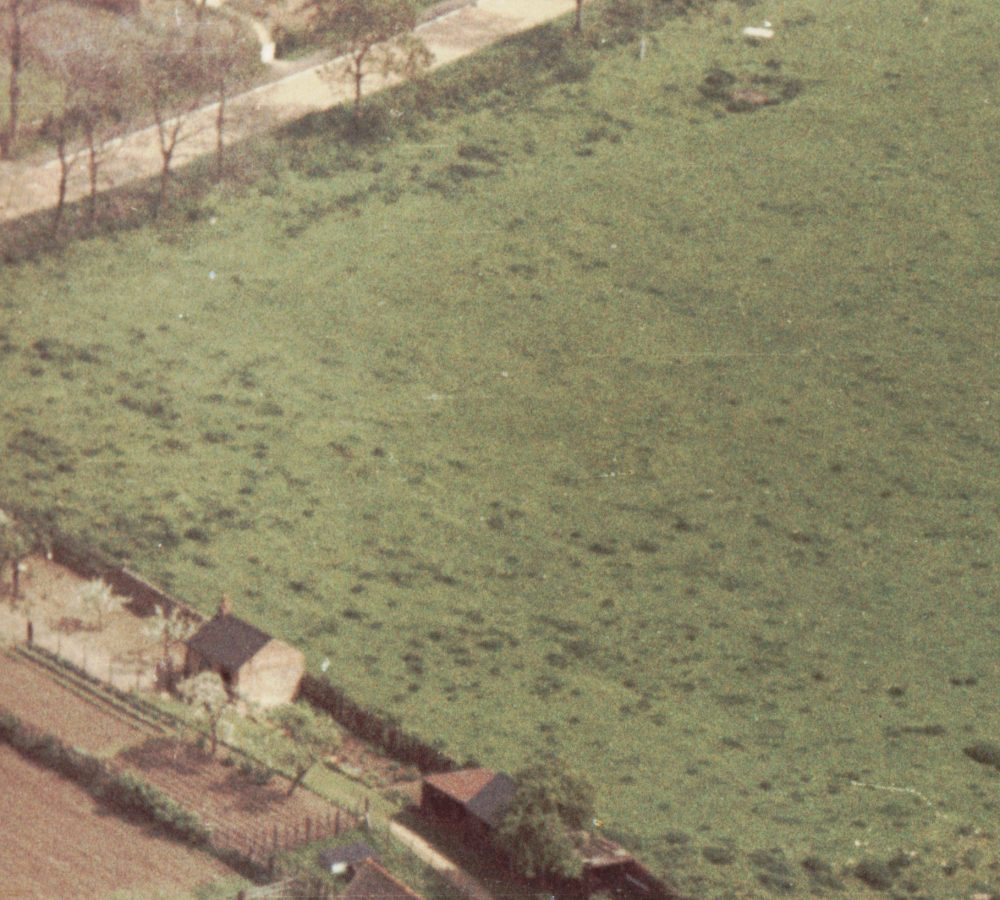
In August 1966 the Parish Council considered the tenant’s application for outline planning permission for two houses on the south side of the playing field and his willingness to negotiate the sale of the remainder of the site to either the PC or a Woodnewton Playing Field Association. However, a resolution from the Village Trust Fund Committee was presented stating the village was against any part of the field being used for building as it would spoil the field for sports if it was made any smaller. It urged the Council to stand by the decision to apply for the Compulsory Purchase Order for the whole field.
At the end of August the County Planning Department, which knew that the tenant had indicated his willingness to sell land to the Parish Council or local PFA if he obtained permission to develop two houses to the south of the site, advised that there would be no question of Compulsory Acquisition until purchase by agreement was ruled out. However, in September the tenant advised that he was not entering into any negotiations as his application for the two houses had been turned down.
Alternative sites for the playing field were being assessed, and a 4.5 acre site belonged to Messrs. Stuarts and Lloyd opposite Sycamore Close was considered as possibly suitable by the NPFA. Stuarts and Lloyd identified a potential problem as they owned the mineral rights (ironstone) as well as the surface which ruled out selling and made leasing more difficult.
The tenant of the public house then left Woodnewton even though the sale of the Horse and Jockey pub and the field had not been completed. The tenant was not able to enter into negotiations to sell the land until he acquired it in December 1966.
Meanwhile, the Parish Council expressed its concerns to the NPFA about the possible dangers from traffic to children having to cross the Nassington Road if the playing field was relocated to the Stuarts and Lloyd land, even though the County Planning Department did not think that a potential road traffic hazard would be a sufficient reason for refusing permission for a playing field on the land.
Later in January 1967 the Horse and Jockey PH without the field (both having been sold to the tenant of the public house the previous December) was offered for sale. The pub was eventually sold and change of use permission granted in August 1967 for residential use.
In March 1967, New Era Development Ltd applied for permission to develop housing on that part of the Horse and Jockey field fronting onto Back Lane. The Parish Council reiterated its objections to the County Planning Department to any planning permission being given for this field as it was required for a village playing field. The Parish Council had decided that the alternative site on the land belonging to Messrs Stewarts & Lloyds was unsuitable and would cost more than the village could afford because of the cost of associated infrastructure works. In addition, the land would only be leased for a limited number of years following which the village would be left without a playing field. The Council also maintained its concerns about road safety.
At its July meeting the Parish Council noted that no planning consent had been granted to New Era to develop the northern frontage of the Horse and Jockey Field, but the Planning Department advised that when sewers and a sewerage disposal scheme came to the village the application would be brought up again. The Rural District Council had also included the field in the recent plan for the proposed limits of development for the village. This meant that if the field were bought on a CPO it would be valued as potential building land.
Consequently, the NPFA believed the land would be valued at a figure too high for the Parish Council to consider and thought the Council should continue looking for alternate land that had no building potential.
Towards the end of 1967 the District Valuer put a valuation of £6,000 on the field. He also advised that the owner believed the market value of the field was not less than £8,000 so would not consider selling for less than £10,000. Some members of the Council suggested that land on the allotment site could be sold for building land and part of the money used towards the purchase of the field.
The Council considered what further action could be taken, including meeting with Lord Brassey to ask for his help and advice to procure a playing field for the village. However, Lord Brassey would not allow the allotment land to be used for building, although he offered to help in any future negotiations to obtain an alternate piece of land.
Therefore, in February 1968 the Parish Council accepted that the village was unable to raise the asking price for the Horse and Jockey Field and advised the NPFA that it would not pursue further the purchase of the land by Compulsory Purchase.
At the 1968 Annual Parish Meeting it was reported that the playing field project had been shelved owing to the large amount of money being asked for the field. It was suggested that a Village Playing Field Association should be formed, but it would be another three years before the search began again in earnest to find a replacement site for the Horse and Jockey Playing Field.
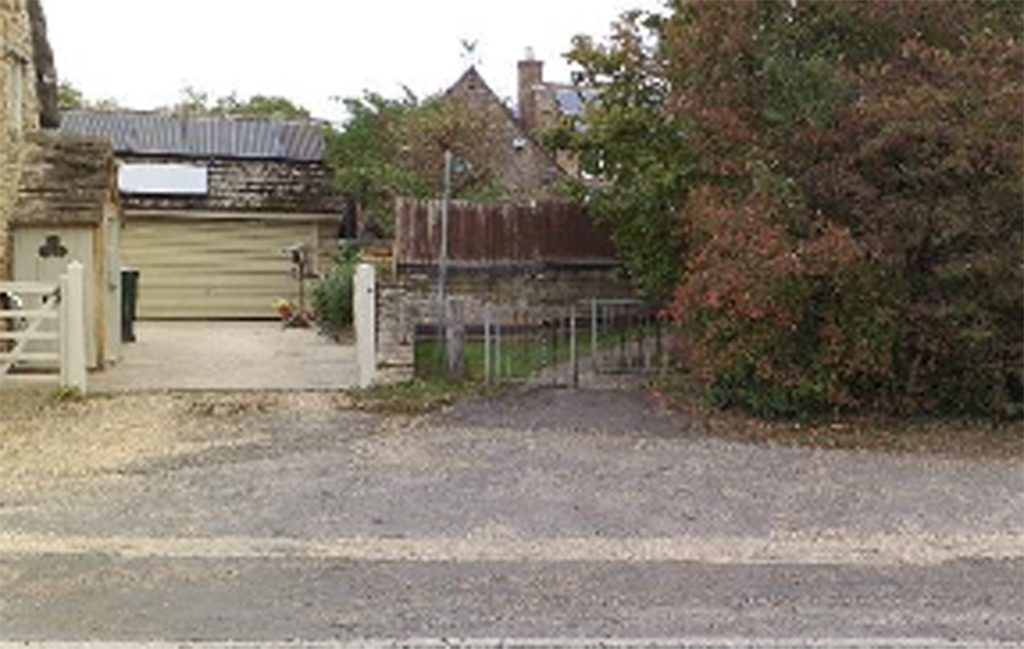
Outline planning consent for 6 houses along the northern boundary of the field was granted in March 1968 to New Era Developments. With the completion of sewers and a STW to serve the village, full permission for these houses was granted but only 5 were built in the early 1970s. These are now 3 to 11 Orchard Lane. The 6th house (No. 1 Orchard Lane) was granted renewed full permission and built in the Former entrance to the playing field, now the 1980s.
The Parish Council considered that the undeveloped part of the land should be kept as open space for the enjoyment of residents and maintained an objection against any further housing on the field. Notwithstanding this, in the late 1970s permission to develop 12 houses on the remaining part of the Horse and Jockey Field was granted and this development is now known as Lindsey Close.
2020